Art History: Comparing the works of the Colonizers vs. the Colonized
A Digital Exhibition by Celeste Manguso
Group Three

Group Three: The French and The Tunisians
The French:
Pre-Colonial:
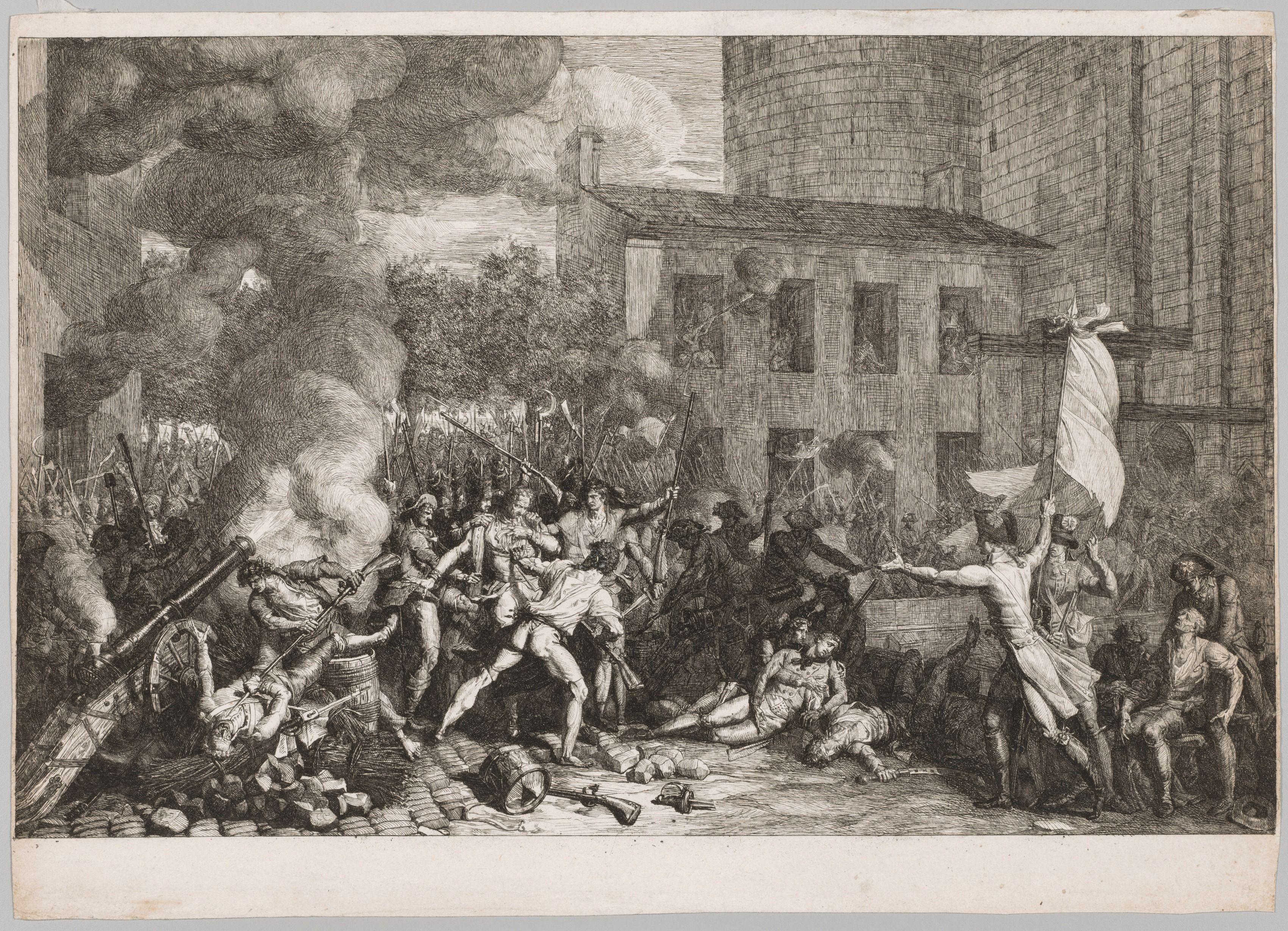
Charles Thévenin, French, 1790, Print of Etching on Laid Paper, 'The Storming of the Bastille, July 14, 1789'
Post-Colonial:
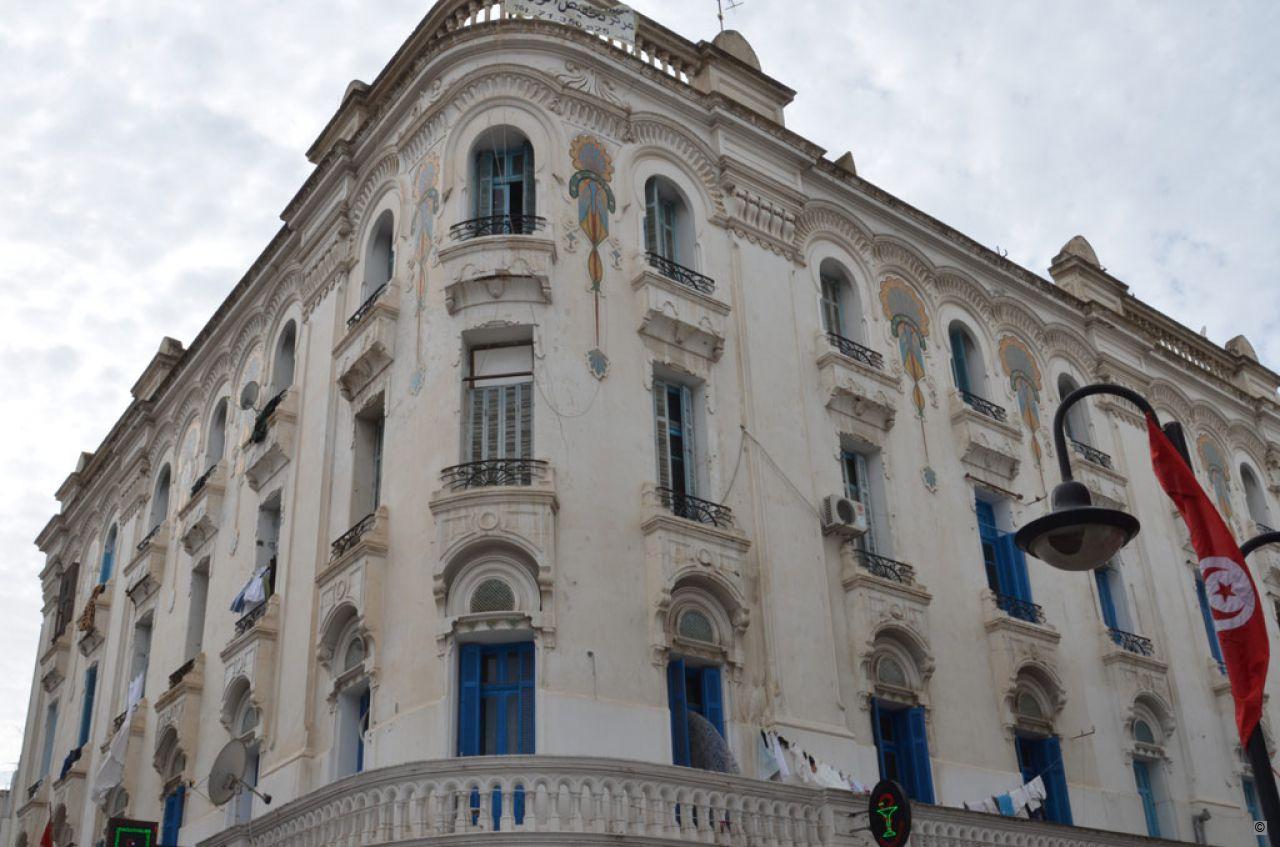
Jean-Emile Resplandy, French (In Tunisia), Late 19th-Early 20th Century, French Colonial Art Nouveau Architecture, 'Palazzo de Guidi'
The Tunisians:
Pre-Colonial:
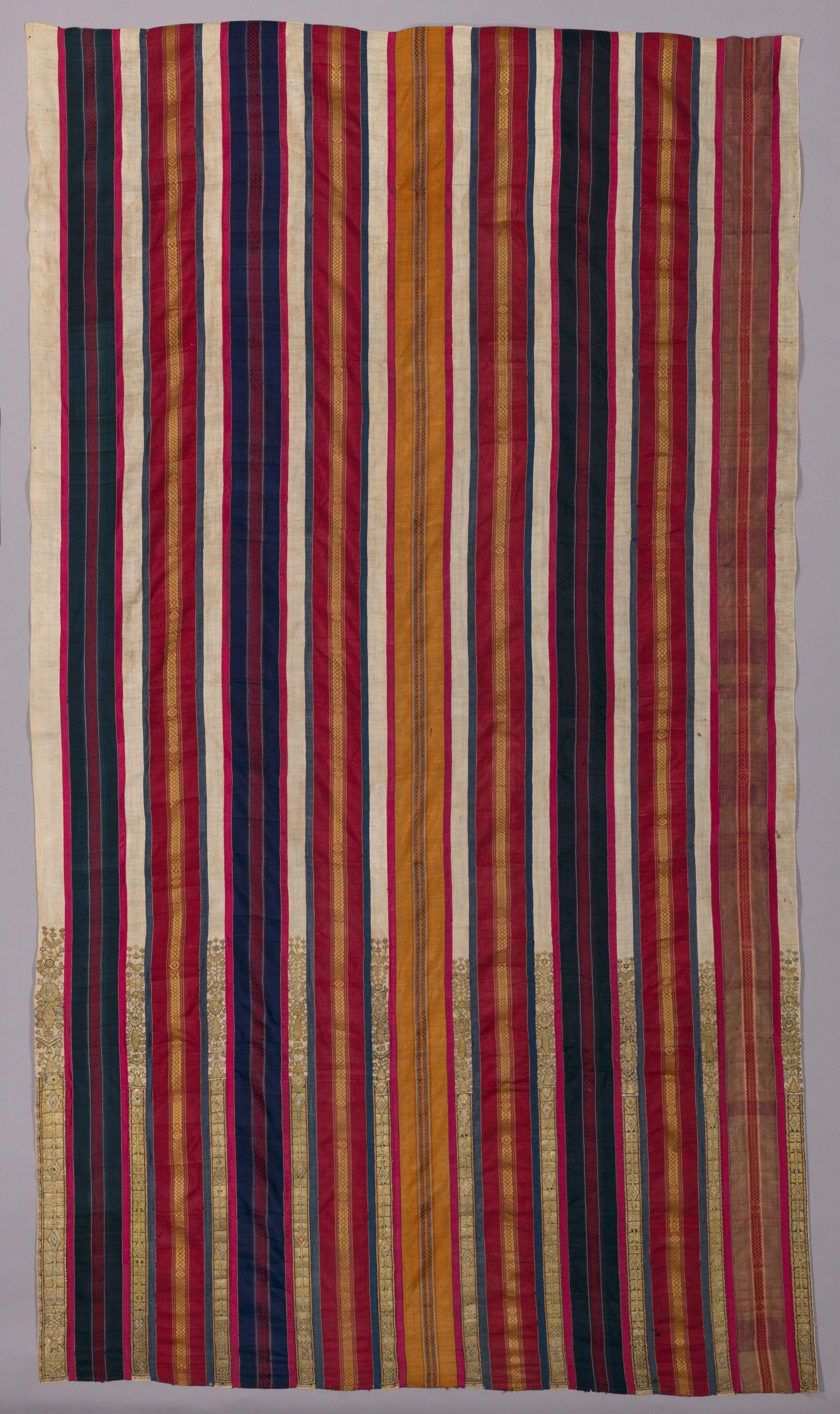
Unknown Tunisian Embroiderer, Tunisian, 15th-Early 16th Century; Silk, linen, metal, and dye; 'Curtain'
Post-Colonial:
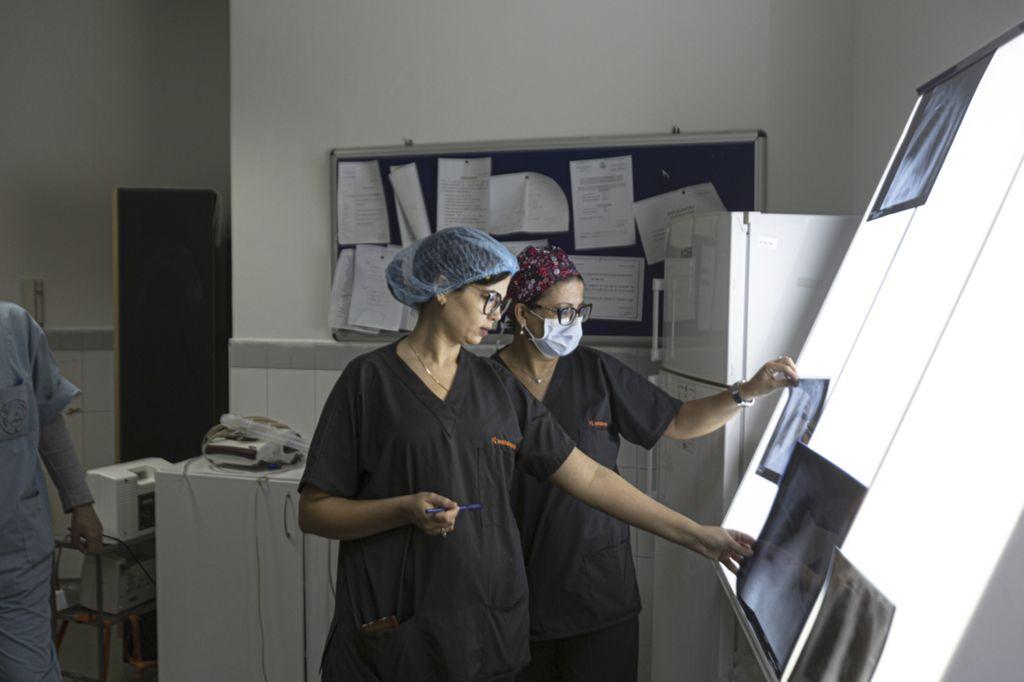
Zied Ben Romdhane, Tunisian, 2022, Documentary Photograph, 'TUNISIA. Ben Arous. 17 October 2022. Amel Mokline, doctor professor intensive care and Hana Fredj assistant doctor in intensive care, at the trauma and burns center.'
Write-Up:
The French:
The first work from France we are examining today is a journalistic etching done by a man named Charles Thévenin. Charles produced this piece, which depicts revolutionaries storming the Bastille, a French prison fortress, in 1789-1790. The piece is powerful, it shows the revolutionaries mounting a strong assault, with cannons and plenty of militiamen assaulting the building, a task which they ultimately succedded. Also in this etching, you can see the bodies of the dead revolutionaries behind their lines, and you can see the guns and bayonets of the French army attempting to defend the building. This piece is interesting in that it was directly etched by the artist, rather than being painted first and then transfered to an etching for print in the newspapers. This enabled the artist to have a quicker turnaround time (and thus, to get this powerful and propagandically important image of revolutionary victory to the masses faster). This also meant that the etching itself was the artist's representation, instead of the etching being a represntation of a painting of an event.
The second French work we are discussing today is a building located at 9 Rue Charles-de-Gaulle in Tunis, Tunisia. It is a large, 3-story building in the Art Nouveau architecural style. This building, in particular, has French, Italian, Tunisian, and Byzantine influence on it's design. The building is, decisively, a European architectural work with some Tunisian influence sprinkled in to make it fit in with the local environment. It was built by a French architect named Jean-Emile Resplandy. There is not much information on Jean-Emile in English, but I was able to find and translate some information from French. Jean-Emile worked in Tunisia on many major buildings in the Art Nouveau style in Tunis, Tunisia from around the 1890's-the 1910's. For a time, he was the head architect at the Public Works Directorate in Tunisia. He designed multiple public buildings for the French government in Tunisia, including the Town Hall, Courthouse, Municpal Theatre, and Ministry of Education. He also worked on various other buildings, including the one seen here. The building is built in the style of an Italian Palazzo, but with clear French influence. It does also have some designs and materials which are Tunisian in origin, but these are taken out of their usual cultural context and placed on an otherwise European building to give it the appearance of being "local" in some way.
The Tunisians:
The first Tunisian work we are looking at is an embroidered curtain. It has a striped design, consisting of multi-colored striped in an alternating pattern. Inside of the cream colored striped, there are embroidered golden designs of plants, birds, and various other geometric shapes and symbols. At the time, birds were seen as a fertility symbol for good luck, particularly in ones marriage. The curtain is very high quality and uses expensive materials, indicating that it was either hung in a wealthy house, or used only for special occasions. This piece was likely made by Jewish artistans on the island of Djerba, off the coast of Tunisia. It is a very intricately woven textile, in the age before industrial textiles manufacturing this curtain would've required very complex skills, demonstrating it's designers mastery of the craft.
The second Tunisian work we are examining is a journalistic photograph from 2022. The photo depicts two doctors examining X-Rays on a lightboard. When zooming in on the photo, both French and Arabic text can be seen in the background and on the shirt of the nurse behind the doctors. The hospital appears very modern, with architecture mirroring the style used in many other modern hospitals, and a newer-looking medical fridge off to the side. This hospital is probably well-equipped, based on the information we can gather from this image. The use of both French and Arabic, alongside the fact that the photo is framed and shot in exactly the same style (that being, the "journalistic" style) as photographers across the world indicates the effects of both colonization and globalization on Tunisia. Even on a single bulletin board, decades after the end of French rule, French and Arabic both co-exist. The hospital is also an example of globalization, with the same medical supply companies providing the same medical-grade construction supplies around the world, a hospital in Tokyo can look like a hospital in North Carolina which can look like a hospital in Tunis.
The Interaction:
The French invaded Tunisia in 1881, and did not release control until 1956. At the time of the French invasion, Tunisia was an independent province of the Ottoman Empire. France used a combination of military invasion and dipolomacy with the Ottoman Empire to sieze the territory. It was organized as a French protectorate, with local leaders remaining in place, but French control being established over foreign policy, military power, and financial control. France also established control over the court system, and the education system followed soon after. Tunisian branches of French schools, such as the École des Beaux-Arts, which taught French and European artistic tradition to French (and a few Tunisian) students in Tunisia. The French government in Tunisia constructed many buildings in the image of European architecture, and promoted European education, French language usage, and European artistic practice through government policy and educational institutions. Even if Tunisians were often unable to gain access to schools like the École des Beaux-Arts de Tunis, they would live in the cities remodeled in a French image, view art crafted in the French style, and learn French first at school. The French were notably, fairly tolerant of local religious practice in Tunisia, however. Christianity, Judaism, and Islam, alongside local religions, remained practice in Tunisia throughout the French occupation.
Conclusion:
When Tunisia gained independence in 1956, it had seen French colonial rule, sent soldiers to fight in World War I and the defense of France in World War II, saw the capitulation of their authorities to the Nazis through the collaborationist Vichy France, saw the use of their territory for Nazi warfare, the complete capture of their government by the Nazis, and finally the liberation by the Allies and the return to French rule. In the aftermath of World War II, both the U.S., and especially the Soviet Union pushed for an end to colonial holdings. This would mark the beginning of the end of French control of Tunisia, ending 10 years after the end of World War II, with the nation becoming a constitutional monarchy. Soon after, however, Tunisia was converted into a dictatorship. It remained this was until the 2011 Arab Spring revolution took place, resulting in Tunisia transitioning again to a democratic system of governance. Tunisian art never went away, though organized attempts to promote French and European art as superior did cause it to go underground to some extent. The École des Beaux-Arts de Tunis was taken under the control of the new Tunisian government after the end of French rule, and today has been split into two schools (one a school of architecture and urban design, and one a school of fine arts). Both schools now teach programs in traditional Tunisian art and architecture, alongside international works, to give a well-rounded education. These schools do still, however, teach primarily in the French language. Ultimately, the Tunisian people have managed to remain connected with their arts, in spite of French influence during thd colonial period.


