Art History: Comparing the works of the Colonizers vs. the Colonized
A Digital Exhibition by Celeste Manguso
Group One

Group One: The United States and the Navajo
The United States
Pre-Colonial:
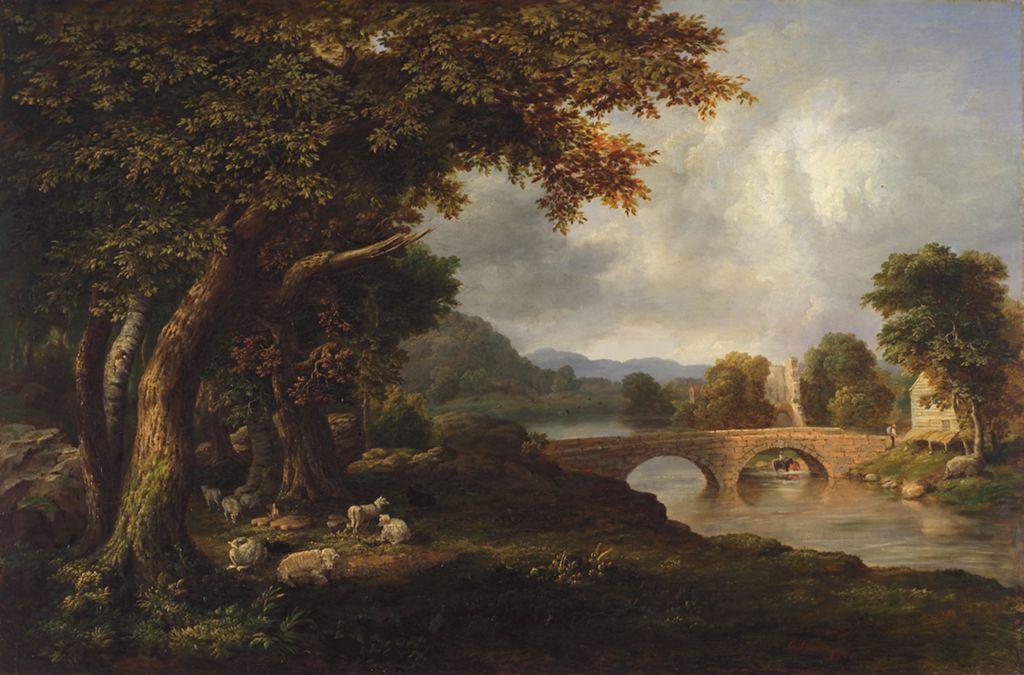
George Inness, American, 1848, Oil on Canvas, 'Landscape'
Post-Colonial:
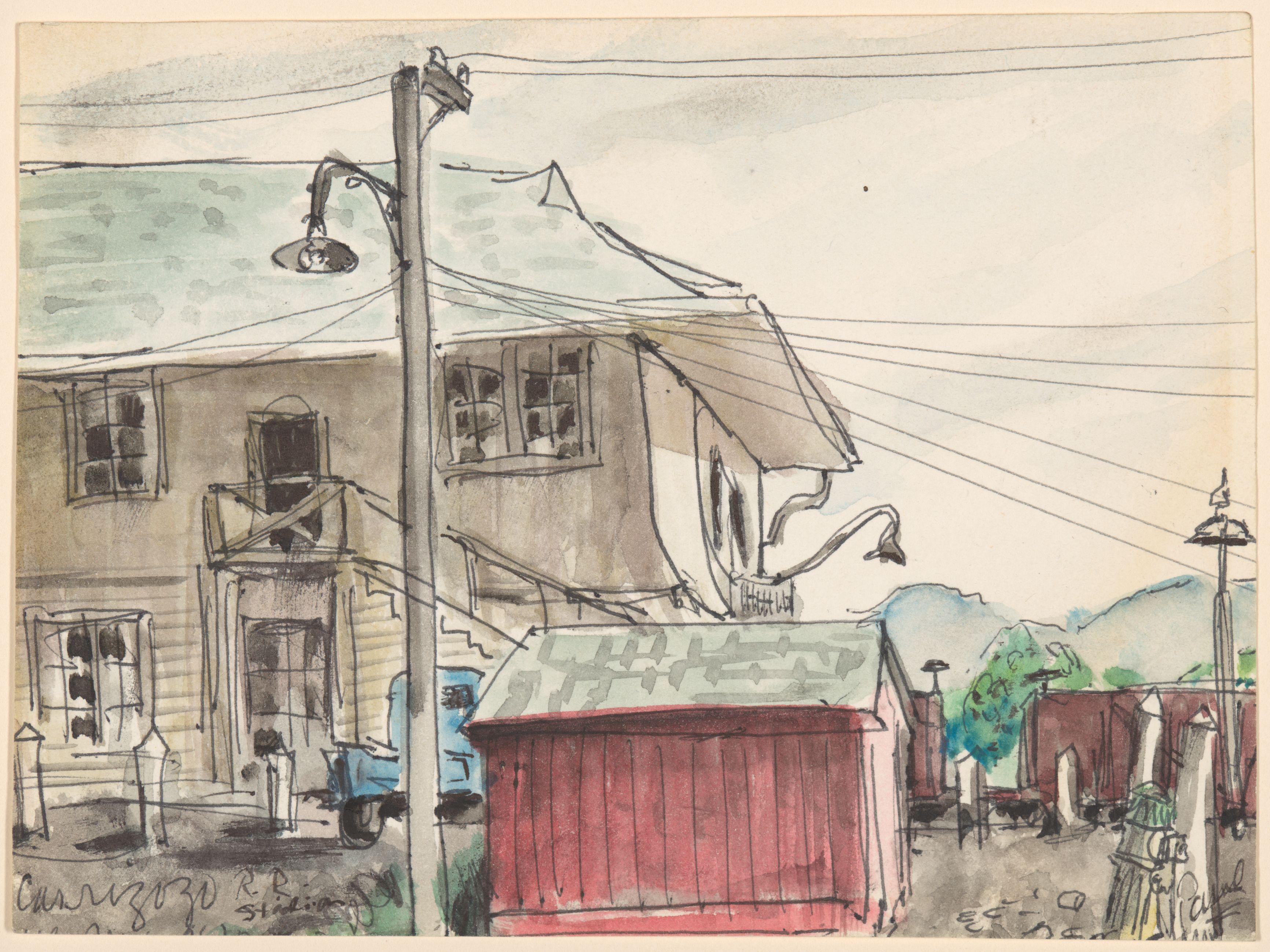
Paul Horgan, American, ca. 1960-1970, Pen Ink and Watercolor, 'Carrizozo Railroad Station'
The Navajo
Pre-Colonial:
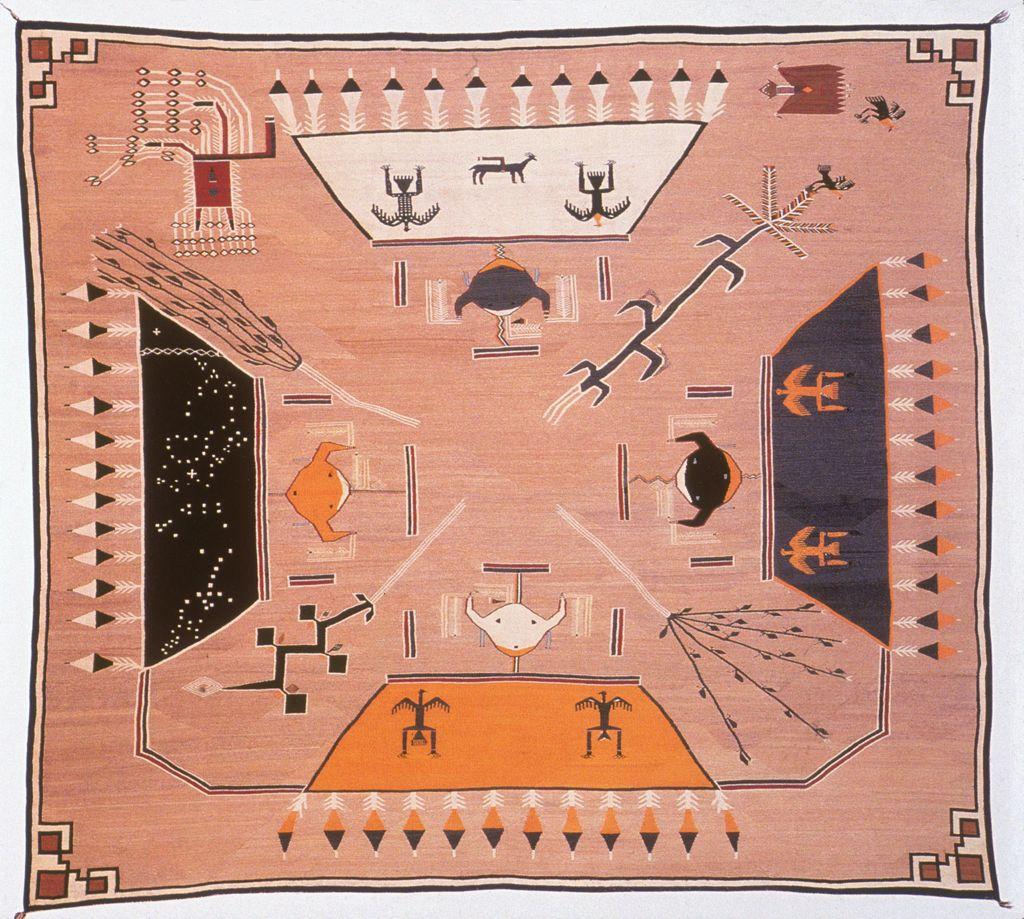
Unknown, Navajo, Early 20th Century, Wool Yarn, 'Sandpainting Weaving'
Post-Colonial:
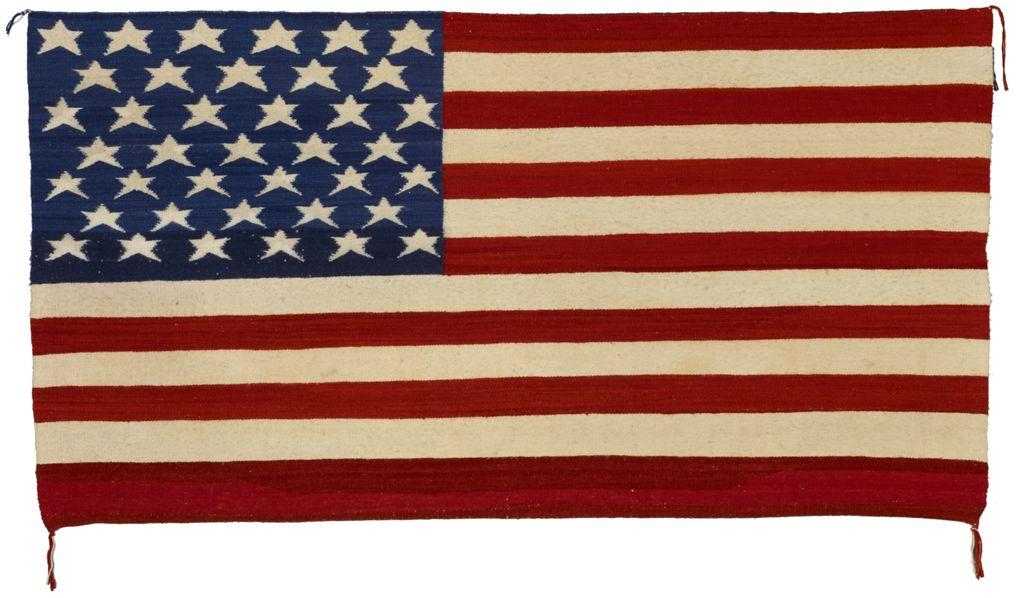
Unknown, Navajo, 1940, Wool; weft-faced plain weave; tapestry weave, 'Rug'
Write-Up:
The United States:
Let's start with the works from the US. The first one depicts an idylic, early American landscape. It was made during a time of industrialization in the United States, and likely seeks to call back to the rural, agrarian lifestyle of the pre-industrial USA. It's style lies somewhere between realism and impressionism, but it probably sits closer to realism.
The second American piece, meanwhile, depicts the further spread of American industrial life throughout the land. It depicts an industrial area, a train station, in New Mexico. Not only does this show how far and wide industrialization had spread by the 1960's (to every corner of the country), but it also shows how American life had spread into Navajo lands. By this time, the US had established many major settlements throughout New Mexico, and that is depicted in this watercolor sketch. The Americans had throughougly taken Navajo (and Pueblo and Apache and Ute and Comanche) land by this point, and then constructed industrial settlements upon that land.
The Navajo:
The first of the Navajo pieces is a weaving depicting the traditional artistic practice of Sandpainting. Sandpaintings are forbidden to be copied or preserved under Navajo tradition, so a few weavings made in taboo are among the only easily accessible representations of Navajo sandpaintings. This piece depicts 4 trapezoids which create a square shape in the middle, various other geometric shapes, figures which probably represent animals, trees, and people, and various other small details. It is notable that this weaving was also made by a Navajo person, despite it breaking with Navajo tradition to be made in the first place.
The second piece is a Navajo woven rug, showing an American flag with 39 stars. This piece is quite on the nose with it's representation of colonial influence, as it is literally depicting the flag of the colonizers. It shows the increasing rate at which many Navajo people integrated with American society, as well as those who seek to sell items to their colonizers as a way of making a living. It's not exactly clear which one this piece is, however. It is possible that it is a piece made by a Navajo person who was also a patriotic American, or it was made by a Navajo person trying to sell items to American settlers, and pandering to them. Either way, it perfectly demonstrates the effect of colonization on a civilization. Either it shows a Navajo person who now identifies with their colonizer, or it shows someone who must pander to their colonizer to make a living.
The Interaction:
The Americans and the Navajo had many interactions throughout the years. We will focus in on the 1860's. During this time, War began in New Mexico and Arizona between the Navajo, the US Government, and the US-Allied Zuni Pueblo peoples. Raids at American Forts like Fort Defiance (Arizona), and various raids of the Zuni Pueblo and it's surrounding farms, and counter-attacks by the Zuni Pueblo and the US Army. This warfare would eventually culminate in the United States taking extreme action. In 1863, Kit Carson ordered the military, and their Zuni allies, to enter Navajo territory and capture as many people as possible, burning down villages and siezing animals in the process. Eventually, the Zuni would break away from the US army on this, seeing their own fields raided, but it did not stop the genocidal actions of the US government. The US government set up a concentration camp called "Bosque Redondo" at the Pecos River, and marched large amounts of Navajo people to this camp, removing them from their homelands, and ignoring any previous treaties or agreements. When the Zuni began to provide refuge to the Navajo and Apache, seeing the vile plans of the Americans revealed to them, they were threatened and warned by the American government. Eventually, the US army would even raid Zuni Pueblo, capturing the Navajo who had hidden among the Zuni and taking them to their concentration camp. Though the US eventually released the Navajo after the end of the civil war, immeasurable damage had been done to their homeland, and an entire generation had been traumatized by the violent genocide undertaken by the US government.
It can be seen in the works of both nations after the colonization had taken place. In the American piece, the Native lands of New Mexico have been settled by Americans, industrialized and made in a euro-american image. And in the Navajo piece, a Navajo person is either reduced to making art which appeals to colonial senses, or themselves identifies with their colonizers enough to make art depicting the US flag. But it isn't exactly that simple.
I myself come from a lineage which includes Navajo and Apache ancestry. I also come from a lineage with European ancestry, including English, Spanish, and Italian. I think having this familial background, having grown up in Colorado with a fairly significant Native American population and history, and being, in some way, a representation of colonization in North America embodied as a person gives me a very interesting perspective. I identify strongly with my native ancestry, but I also identify strongly with my Euro-American ancestry, and I think that goes to show how someone can be both. Despite my ancestry indicating that at some point my ancestors were victims of the very colonization I speak of here, I remain proud of both of my identities. I am an Italian-American, a Hispanic-American, a Native American and a plain old American-American all at the same time. And I think that something similar could be true of the person who made the US flag rug. On it's face, it appears that it is either a tragic story of forced assimilation, or a story of capitalistic coersion, it is also possible that is is merely someone who is proud of both ancestries. Without knowing the artist, it is impossible to know for sure which one it was.
Conclusion:
Colonization is a violent, selfish act, but it is also an act of cultural exchange (at the barrel of a gun as it may be), and one of striking back. This is demonstrated perfectly in the history above. The Navajo struck back. the Zuni allied with the Americans only to harbor the Navajo and themselves face an American attack. Colonization is not as simple as it is sometimes portrayed. The colonizer and the colonized leave marks on one another, and the colonized live on in these marks.
Today, the Navajo maintain some level of soverignty, but they are not entirely soverign. They were able to remain close to their homeland, perhaps due to the very fierce resistance they put up to American colonization attempts. The Navajo have dealt with significant colonization of their lands, government, and settlements. But traditional Navajo ways, as well as new ways of Navajo life, remain in effect among many Navajo people.


